Today's Peoples Daily features an article about the government's policy of putting more money in peoples' pockets to boost domestic consumption. This year's macroeconomic policy mantra is to change the structure of the economy by expanding consumer demand. The article says that a "bulging money bag" is the best way to improve peoples' livelihood, boost consumption, and allow "more people to enjoy the results of development."
The article cites four major ways that the government has put money in rural peoples' pockets: raising minimum wages, raising minimum purchase prices for grain, increasing farm subsidies, and increasing loans for farmers. With all this extra money being poured into rural peoples' pockets, it's no wonder food prices are going up.
The central government has pressured provinces to institute, increase, and enforce minimum wages. All provinces have now set minimum hourly and monthly wages. Shanghai has the highest monthly minium wage, at 1120 yuan ($167), and Beijing has the highest minimum hourly wage, at 11 yuan ($1.65). Hainan raised its minimum wage 37%. In the second quarter the National Bureau of Statistics estimated that there were 157.23 million rural migrants working away from home. That was 6.26 million more than in 2009.
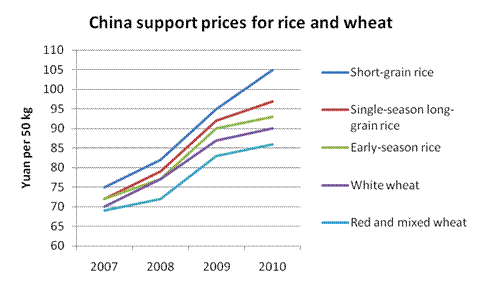
Rural people still get most of their income from planting crops. So raising grain prices is another important measure for raising rural incomes. This year wheat prices and early-season rice prices were raised about 3.5%, middle- and late-season long-grain rice price was raised 5.4% and short-grain rice price was raised 10.5%. The cumulative increases in minimum grain prices over the last four years range from 25% to 40%.

The government has raised farm subsidies by more than 100 billion yuan since 2006. Subsidies doubled in one year (2008) to compensate farmers for rising fuel prices and other input costs. This year China's four biggest farm subsidies totaled 135 billion yuan, over $20 billion, and equal to or greater than U.S. farm subsidies. The average subsidy per farm family was up 17% this year, to 320 yuan ($47)
New subsidies are being added. Pilot seed subsidy programs for highland barley, peanuts, and potatoes were begun. There are also subsidies for planting trees and preserving wetlands. A new grassland preservation subsidy will be introduced next year with funding of 13 billion yuan.

The fastest-growing segment of rural income is compensation for land occupied for nonfarm uses. Provinces have been told to come up with new mechanisms for determining compensation and adjusting it "scientifically" every 2-to-3 years. The tax revenue from the rural land occupation tax is supposed to be "tilted" toward rural and agricultural uses that will benefit farmers.
Another way to boost farmer income is by loaning them more money. Rural banks and credit cooperatives have been "encouraged" to make more micro loans to farmers. In remote areas of 12 western provinces, financial institutions get subsidies for operating costs for rural loans. This year the Ministry of Finance will give awards of 2% (of the loan value?) to financial institutions that raise their rural lending by at least 15%. There are a lot of village and town banks, mutual lending cooperatives, rural lending companies, and loan guarantee companies being set up to boost rural lending.
The article doesn't mention dozens of other rural subsidies, including subsidies for school fees, medical care, infrastructure construction, water projects, financial awards to agricultural counties, and subsidies for standardized farms.
For decades rural earnings and prices were artificially depressed; now the government has decreed that rural wages and prices shall all be artificially raised. Trouble is, when you pour money into an economy through loans and subsidies or raise wages and prices by decree it creates inflationary pressure instead of raising the real earning power of people. The government's decree is boosting costs of labor, land and commodities and is in large part responsible for rapid rise in agricultural and food prices in China this year.
The article cites four major ways that the government has put money in rural peoples' pockets: raising minimum wages, raising minimum purchase prices for grain, increasing farm subsidies, and increasing loans for farmers. With all this extra money being poured into rural peoples' pockets, it's no wonder food prices are going up.
The central government has pressured provinces to institute, increase, and enforce minimum wages. All provinces have now set minimum hourly and monthly wages. Shanghai has the highest monthly minium wage, at 1120 yuan ($167), and Beijing has the highest minimum hourly wage, at 11 yuan ($1.65). Hainan raised its minimum wage 37%. In the second quarter the National Bureau of Statistics estimated that there were 157.23 million rural migrants working away from home. That was 6.26 million more than in 2009.
Rural people still get most of their income from planting crops. So raising grain prices is another important measure for raising rural incomes. This year wheat prices and early-season rice prices were raised about 3.5%, middle- and late-season long-grain rice price was raised 5.4% and short-grain rice price was raised 10.5%. The cumulative increases in minimum grain prices over the last four years range from 25% to 40%.
The government has raised farm subsidies by more than 100 billion yuan since 2006. Subsidies doubled in one year (2008) to compensate farmers for rising fuel prices and other input costs. This year China's four biggest farm subsidies totaled 135 billion yuan, over $20 billion, and equal to or greater than U.S. farm subsidies. The average subsidy per farm family was up 17% this year, to 320 yuan ($47)
New subsidies are being added. Pilot seed subsidy programs for highland barley, peanuts, and potatoes were begun. There are also subsidies for planting trees and preserving wetlands. A new grassland preservation subsidy will be introduced next year with funding of 13 billion yuan.

The fastest-growing segment of rural income is compensation for land occupied for nonfarm uses. Provinces have been told to come up with new mechanisms for determining compensation and adjusting it "scientifically" every 2-to-3 years. The tax revenue from the rural land occupation tax is supposed to be "tilted" toward rural and agricultural uses that will benefit farmers.
Another way to boost farmer income is by loaning them more money. Rural banks and credit cooperatives have been "encouraged" to make more micro loans to farmers. In remote areas of 12 western provinces, financial institutions get subsidies for operating costs for rural loans. This year the Ministry of Finance will give awards of 2% (of the loan value?) to financial institutions that raise their rural lending by at least 15%. There are a lot of village and town banks, mutual lending cooperatives, rural lending companies, and loan guarantee companies being set up to boost rural lending.
The article doesn't mention dozens of other rural subsidies, including subsidies for school fees, medical care, infrastructure construction, water projects, financial awards to agricultural counties, and subsidies for standardized farms.
For decades rural earnings and prices were artificially depressed; now the government has decreed that rural wages and prices shall all be artificially raised. Trouble is, when you pour money into an economy through loans and subsidies or raise wages and prices by decree it creates inflationary pressure instead of raising the real earning power of people. The government's decree is boosting costs of labor, land and commodities and is in large part responsible for rapid rise in agricultural and food prices in China this year.
Comments