Shuanghui Group, China's largest meat-processing company, was recently caught selling pork tainted with illegal feed additives.
Ironically, in January 2009 Shuanghui was a key company in launching a "moral food company" campaign. This event came several months after the melamine crisis broke, so apparently it was aimed at restoring consumer confidence in food. The campaign was organized by the Central Civilization Office, a communist party propaganda organization. The Shuanghui site still has a special section devoted to the morality campaign.
The Shuanghui "moral company" event consisted of a big meeting attended by company executives, the vice mayor of Luohe City (Shuanghui's home base), officials from the Agency for Quality Inspection and Quarantine, and civilization office officials. There was much pomp and pageantry.
The main theme was Shuanghui Group's commitment to be a moral company of integrity. Shuanghui made "a solemn commitment" to the entire society through spiritual civilization media: “Adhere to business integrity, Abide by company morality; manufacture and sell food products with assurance; improve service system, have a responsibility to consumers.”
Shuanghui promised to keep in mind its responsibility to improve food safety over the entire industry chain, especially by controlling animal-raising.
Executives and factory workers made speeches and signed a giant copy of the company pledge. The company's six subsidiaries were hooked up by video. Workers lined up on the factory floor and recited a pledge to use safe practices and uphold their commitment to society.

The chairman of Shuanghui signs the morality pledge

The chairman recites the pledge with workers

Factory workers recite the pledge. The banner reads, "strict business management, manufacture and sell food with assurance."

Workers at a Shuanghui farm pledge. "Create green animal husbandry, supply pork with assurance."
Ironically, in January 2009 Shuanghui was a key company in launching a "moral food company" campaign. This event came several months after the melamine crisis broke, so apparently it was aimed at restoring consumer confidence in food. The campaign was organized by the Central Civilization Office, a communist party propaganda organization. The Shuanghui site still has a special section devoted to the morality campaign.
The Shuanghui "moral company" event consisted of a big meeting attended by company executives, the vice mayor of Luohe City (Shuanghui's home base), officials from the Agency for Quality Inspection and Quarantine, and civilization office officials. There was much pomp and pageantry.
The main theme was Shuanghui Group's commitment to be a moral company of integrity. Shuanghui made "a solemn commitment" to the entire society through spiritual civilization media: “Adhere to business integrity, Abide by company morality; manufacture and sell food products with assurance; improve service system, have a responsibility to consumers.”
Shuanghui promised to keep in mind its responsibility to improve food safety over the entire industry chain, especially by controlling animal-raising.
Executives and factory workers made speeches and signed a giant copy of the company pledge. The company's six subsidiaries were hooked up by video. Workers lined up on the factory floor and recited a pledge to use safe practices and uphold their commitment to society.

The chairman of Shuanghui signs the morality pledge

The chairman recites the pledge with workers
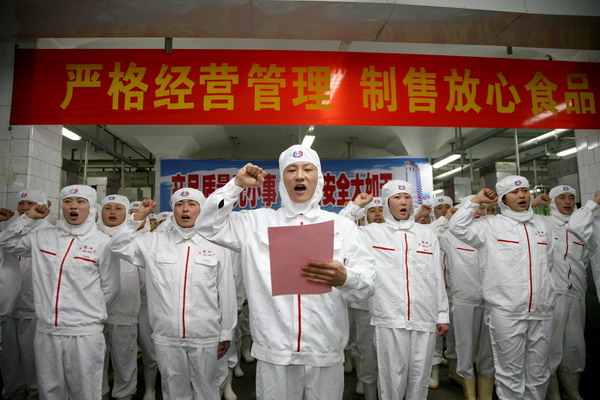
Factory workers recite the pledge. The banner reads, "strict business management, manufacture and sell food with assurance."

Workers at a Shuanghui farm pledge. "Create green animal husbandry, supply pork with assurance."
Comments